Cross-Training With Karate: How Karate Classes Make You Better at Other Sports
Highlights
- Karate builds balance and body control that carry over to sports like soccer, basketball, and hockey.
- Regular stretching and dynamic kicks improve flexibility and range of motion, which can help reduce injury risk.
- Fast, powerful techniques train the explosive movement athletes need for sprinting, jumping, and changing direction.
- Partner drills sharpen focus and reaction time, helping athletes respond faster during competition.
- The discipline and mental toughness developed in karate help athletes stay composed under pressure.
- Chase Karate offers Traditional Okinawan Karate programs for kids, teens, and adults in the Greater Rochester area.
Athletes are always looking for an edge. Whether it’s a young soccer player trying to get faster, a basketball player working on balance, or a teen hoping to make the varsity team, the right training can make a big difference. While extra practice in your main sport helps, adding a different activity can often unlock improvements that repetition alone can’t.
That’s where cross-training comes in. By building skills in another discipline, athletes develop strength, coordination, and mental focus in new ways. These benefits often show up on the field, court, or ice in surprising ways.
Martial arts have become a popular choice for athletes who want structured, skill-based training. According to LLCBuddy, 15% of clients who use martial arts studios do so for requirements related to personal training or small group instruction. Karate’s combination of physical conditioning and mental discipline makes it an especially strong complement to other sports.
At Chase Karate, we teach Traditional Okinawan Karate to kids, teens, and adults throughout the Greater Rochester area. Led by Sensei Chris Chase, every karate class is designed to build focus, discipline, strength, and confidence. Below, we explore how karate training can help make you or your child better at other sports.
Building Balance and Body Control
Balance is one of the most important athletic skills, yet it’s often overlooked in traditional sports practice. Karate students regularly train stances, kicks, and transitions that require them to stay stable on one leg or shift weight smoothly from one position to another. Over time, this builds stronger stabilizing muscles and better awareness of how the body moves.
These skills translate directly to sports that require quick footwork and changes of direction. Soccer players maintain control while striking the ball, basketball players stay balanced when landing, and hockey players hold their edges through tight turns. A karate class helps athletes develop the body control that keeps them steady under pressure.
Improving Flexibility and Range of Motion
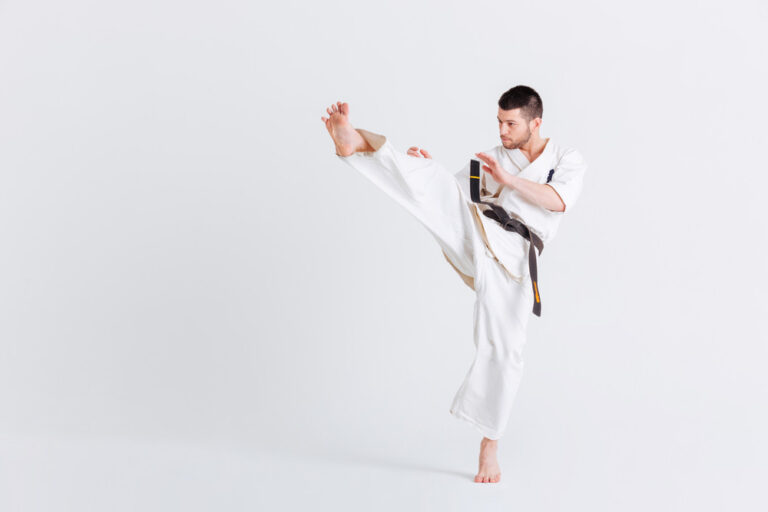
Flexibility plays a major role in athletic performance and injury prevention. Karate includes dynamic stretching, high kicks, and deep stances that gradually increase range of motion in the hips, hamstrings, and shoulders. Many students notice improvements in flexibility within a few months of consistent training.
Greater flexibility allows athletes to move more freely and efficiently. A baseball pitcher can rotate more fully, a swimmer can extend further with each stroke, and a runner can lengthen their stride. Improved mobility may also help reduce the strain that can lead to pulled muscles and other common sports injuries.
Developing Explosive Power and Speed
Many sports depend on short bursts of power, such as sprinting, jumping, or quickly changing direction. Karate techniques are built around speed and explosive movement, with punches and kicks that generate force from the ground up through the hips and core. Practicing these movements repeatedly trains the body to produce power quickly and efficiently.
This explosive strength carries over to a wide range of athletic movements. Football players can fire off the line faster, volleyball players can jump higher, and tennis players can react more quickly to the ball. Each karate class gives athletes the chance to develop speed and power in a fun, structured way.
Sharpening Focus and Reaction Time
Success in sports often comes down to split-second decisions. Karate training includes partner drills that require students to read an opponent’s movements and respond quickly. This constant practice helps sharpen reflexes and improves the connection between what the eyes see and how the body reacts.
Focus is just as important as physical speed. Karate teaches students to stay present and attentive, blocking out distractions so they can respond with precision. Athletes who practice this kind of concentration often find it easier to stay locked in during games, matches, and competitions.
Strengthening the Core
A strong core is the foundation of nearly every athletic movement. In karate, power for strikes and kicks comes from rotating the hips and engaging the core muscles. Stances and controlled movements also require constant core activation to maintain proper form.
A stronger core improves stability, balance, and power transfer in other sports. Golfers and hitters benefit from more powerful rotation, while runners and skaters gain better posture and endurance. Our teen and adult karate class programs are designed to build strength through diverse workouts that enhance overall physical resilience.
Building Mental Toughness and Discipline
Physical skills are only part of what makes a great athlete. Karate emphasizes discipline, respect, and perseverance, values that help students push through challenges both in and out of the dojo. Earning each new belt rank requires patience, consistent effort, and a willingness to keep improving.
These lessons carry over naturally to team sports and individual competition. Athletes who train in karate often show greater composure under pressure, better listening skills, and stronger resilience after setbacks. For young athletes, these qualities can also boost confidence and help them become better teammates.
Preventing Overuse Through Variety
Many young athletes focus on one sport for most or all of the year, which can increase the risk of burnout and overuse injuries. According to Project Play, 10% of children play one sport year-round. Adding a different type of training helps balance the body and gives overworked muscles and joints a chance to recover.
Karate works muscles and movement patterns in different ways than most team sports. This variety supports well-rounded athletic development while keeping training fresh and enjoyable. A weekly karate class can be an excellent way to stay active during the off-season while building skills that make athletes stronger when they return to their main sport.
Training Smarter With Chase Karate
Cross-training with karate helps athletes improve balance, flexibility, power, focus, core strength, and mental toughness. Whether you’re a young athlete looking to stand out or an adult who wants to stay in shape for weekend games, karate offers benefits that carry over to nearly every sport.
Chase Karate offers programs for every age, including Dragons for ages 5 to 7, Juniors for ages 8 and up, and classes for teens and adults. Contact Chase Karate today at (585) 455-5739 to book your assessment class and see how karate can elevate your game.